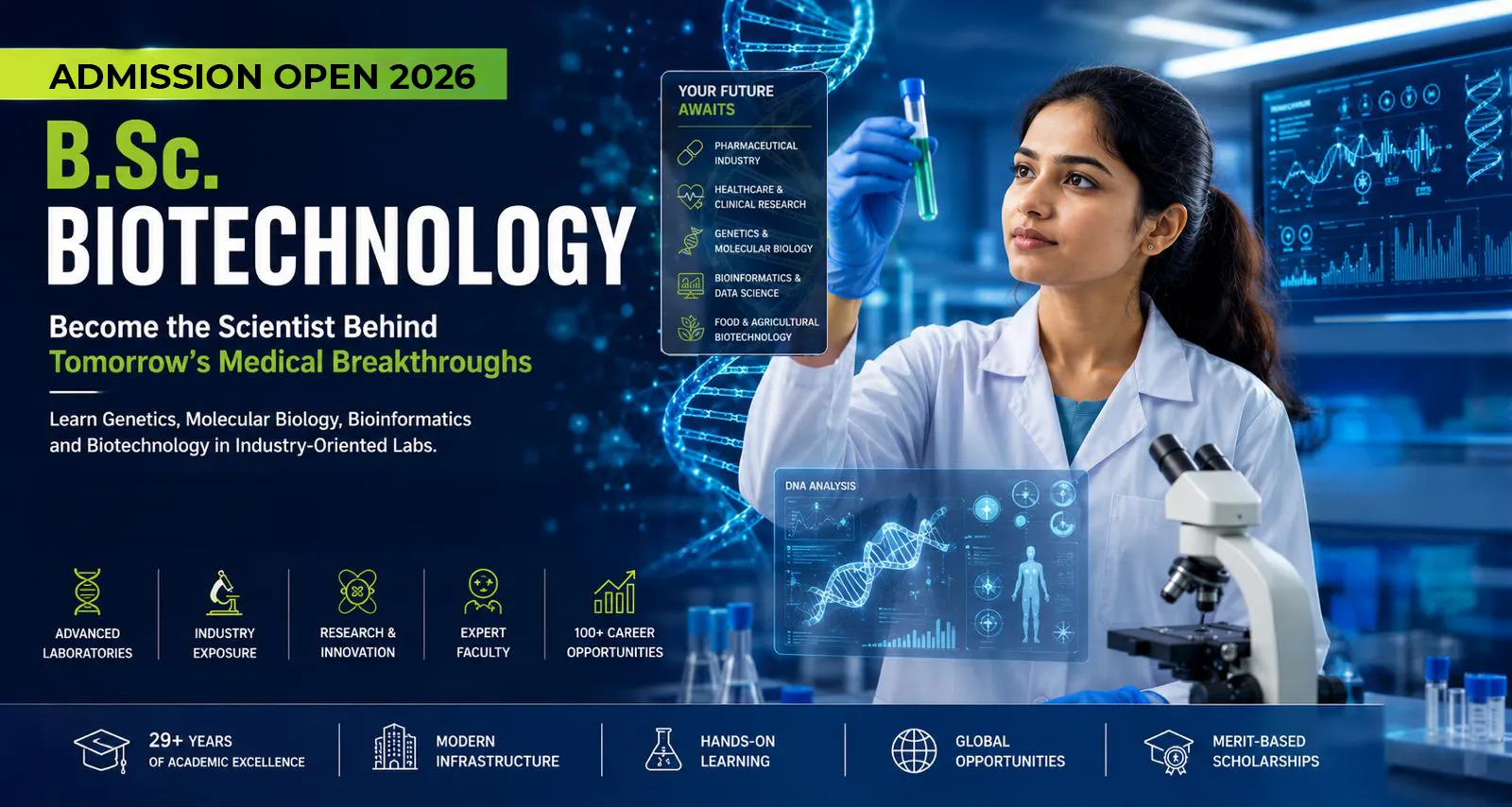
Biotechnology is among the fastest-growing fields in the world — transforming medicine, agriculture, environment, and industry. At Lloyd Group of Institutions, we offer B.Sc. Biotechnology (Honours + Research), a 4-year programme under NEP 2020 that goes beyond the conventional degree.
Affiliated to Chaudhary Charan Singh University (CCSU), Meerut, this programme is designed for students who want to not just learn science — but apply it, question it, and advance it. Every semester builds on the last, culminating in a full year of supervised, original research.
PCR, gene cloning, blotting, DNA fingerprinting — industry-standard techniques from Year 1
Diagnostics, vaccine biology, drug design — building skills for the pharma sector
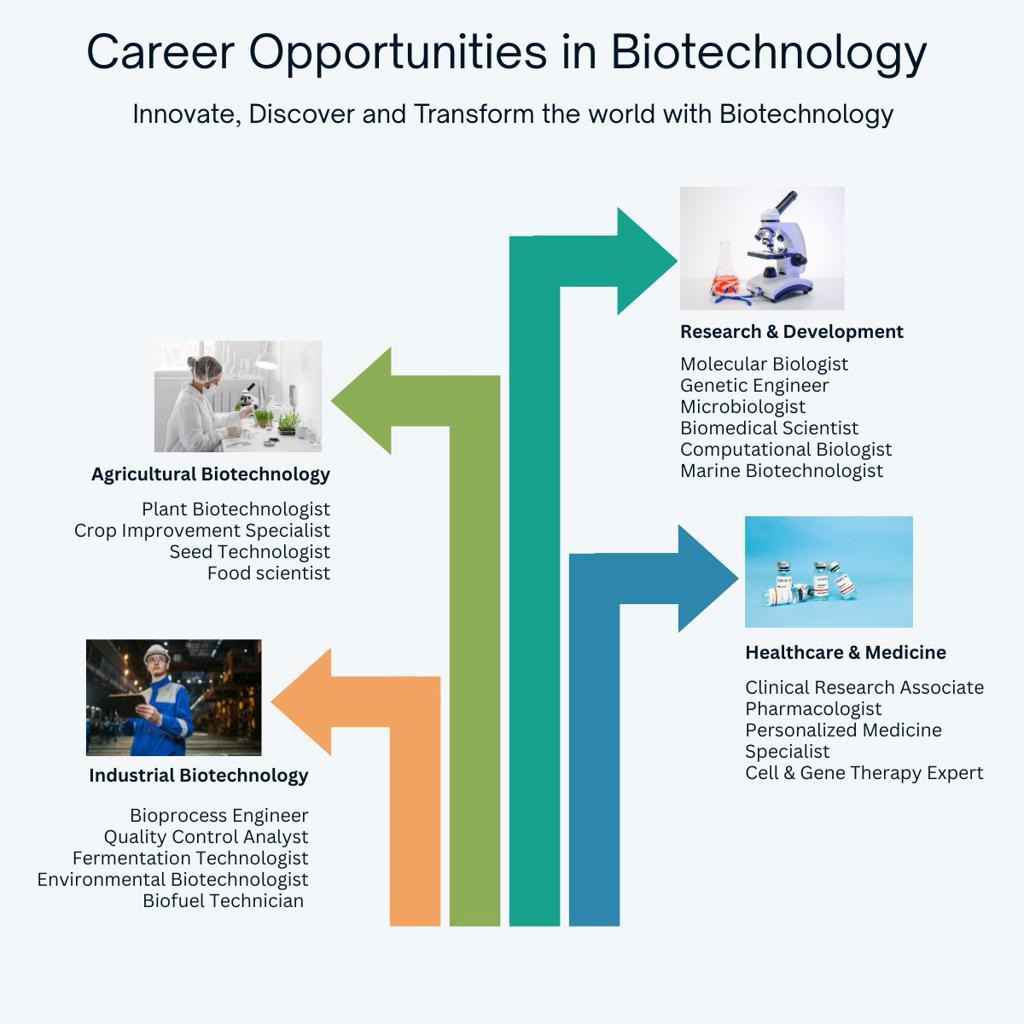
Tissue culture, GM crops, biopesticides — aligned with India's AgriTech revolution
Bioremediation, wastewater treatment, biosensors — solving tomorrow's problems today
Fermentation, bioreactors, enzyme technology — training for bioprocess industry
In-silico research, sequence analysis, protein modelling — the future of biology



Every course in this programme is mapped to defined Programme Educational Objectives (PEOs), Programme Learning Outcomes (PLOs), and Programme Specific Outcomes (PSOs) as mandated by CCSU and UGC guidelines.
Teach courses in basic sciences, biotechnology and introduce concepts of industrial biotechnology.
Explain fundamental and advanced concepts of life mechanisms, complexity and diversity of life on the planet.
Impart knowledge about biochemical and molecular underpinnings of cellular and metabolic functions.
Impart knowledge of tools and techniques for genetic manipulation of bacteria, plants, animals and their products.
Introduce basic skills for statistical and biological sequence data analysis.
Teach the importance of biotechnology for society in the future.
Provide necessary training for conducting basic biotechnology experiments.
Knowledge of basic sciences: Understand environmental science, green chemistry, biology and their applicability in nature.
Problem analysis: Identify, express and analyze problems related to natural sciences.
Design/development of solutions: Design or generate solutions for common problems of natural science to improve public and environmental health.
Modern tool usage: Generate, select and apply modern techniques and resources for understanding natural sciences.
Environment and sustainability: Understand the impact of science to improve environmental health and sustainable development.
Project management and lab culture: Acquire skills in handling scientific instruments, planning and performing laboratory experiments.
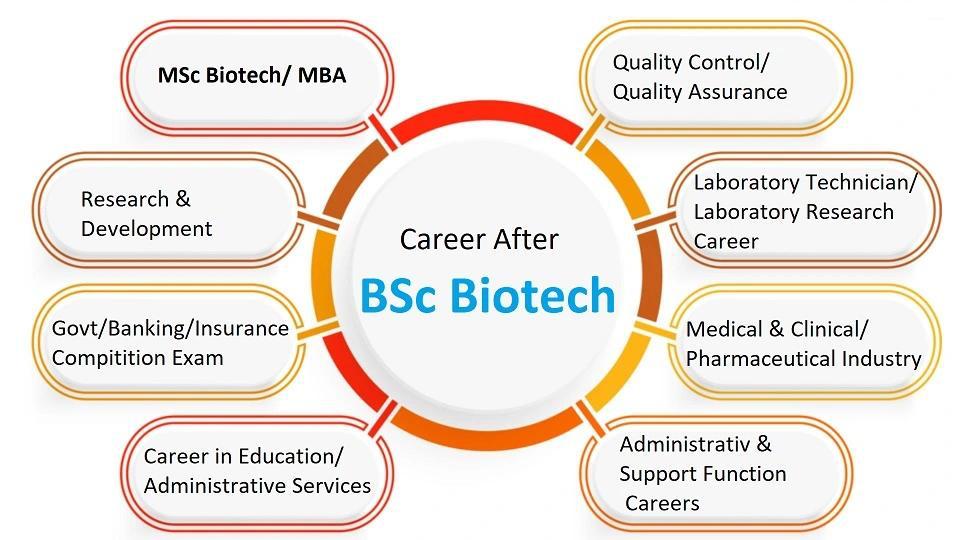
Future prospective: After completion, students have the option to go for M.Sc. and then research for welfare of mankind or prepare for competitive examinations.
Life-long and interdisciplinary approach: Realize how developments in any science subject help other science subjects and how interdisciplinary approaches provide better solutions for sustainable development.
The students will understand the basic metabolic and molecular processes required for normal cellular functions.
The students will learn about different tools and techniques required for genetic manipulation, microbial culture and biochemical analysis.
The students will be able to execute basic experiments related to biochemistry, microbiology, cell biology, recombinant DNA technology, etc.
The students will be able to pursue higher studies in diverse areas of biological sciences or take up jobs in various biotechnology sectors.
Six reasons why Lloyd's B.Sc. Biotechnology (Hons + Research) programme stands apart.
The only structure that qualifies you for direct Ph.D. entry and international university admissions (UK, USA, Germany). Far stronger than a 3-year B.Sc.
Specialised labs including Molecular Biology, Cell Culture, Bioinformatics, and a dedicated 4th-year Research Lab with advanced instruments.
Maximum 20–25 students per lab batch. Every student personally operates instruments.
Merit-based scholarships (80%–95%+), SC/ST Co-curricular/extra curricular activities scholarships, girl student concessions, and EWS support — financial barriers removed.
Official CCSU syllabus 8 semesters across 4 years under NEP 2020. Each year builds core disciplinary knowledge, practical skills, electives, and enhancement courses.
Credit Definition: 1 Hr. Lecture/Tutorial per week = 1 Credit | 1 Hr. Practical per week = 0.5 Credit | 2 Hrs. Practical per week = 1 Credit
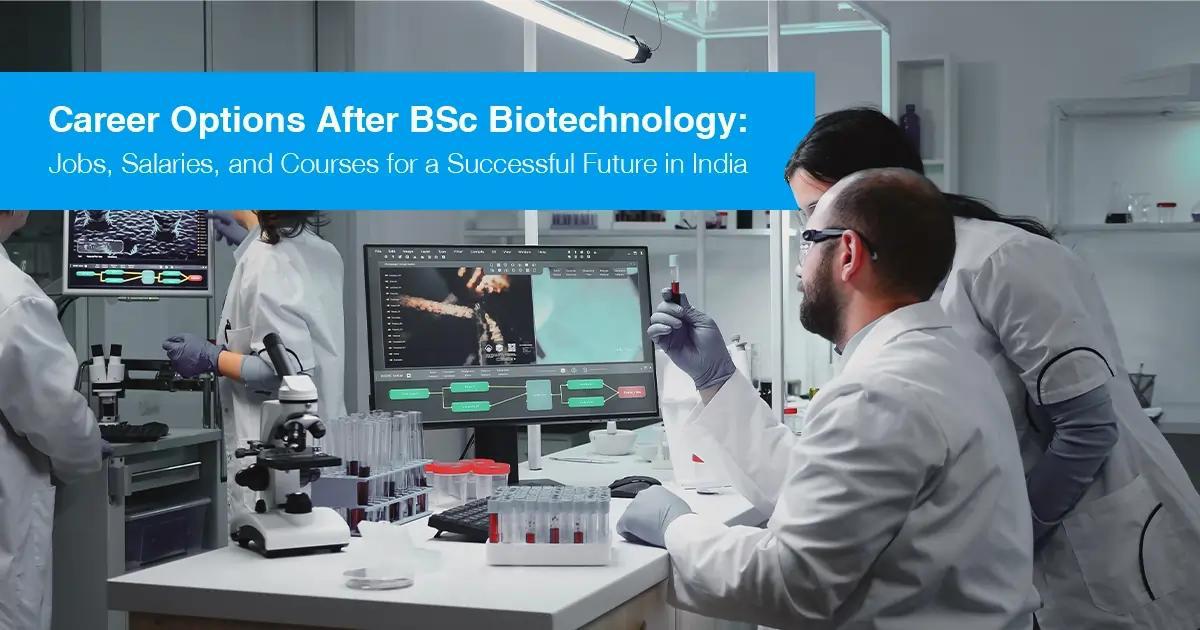
Six specialised laboratories stocked with advanced instruments give students real research exposure from day one.
 Call Now
 WhatsApp